
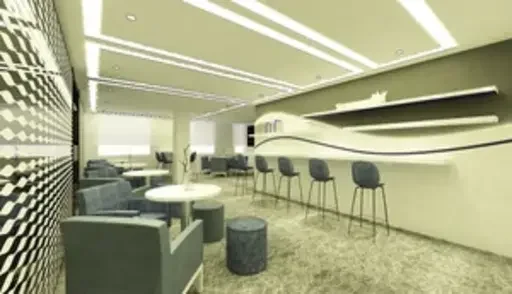
Choosing an interior design company in Singapore comes down to three things: a portfolio that actually covers your type of space, a process that accounts for Singapore's compliance requirements, and a design approach built around how your team will use the space day to day, not just how it will photograph on completion.
Why This Decision Matters More Going Into 2026
Singapore's commercial property market is tightening at the top end. Market commentary from Conexus Studio points to Central Business District vacancy forecast to fall below 4 percent, with businesses increasingly upgrading into premium, ESG-aligned space rather than simply renewing existing leases. That shift raises the bar for office fit-outs: a design that would have passed as adequate a few years ago now has to work harder to justify a premium rent.
Hybrid work has also changed the brief. Industry data reported via Design Bureau, citing the Flex Index, indicates roughly two thirds of firms now offer some form of location flexibility, which changes how much fixed desk space an office actually needs versus how much should go to shared and collaborative areas.
What an Interior Design Company Does Versus an Interior Design Consultant
The two terms are often used interchangeably, but they point to slightly different working relationships.
An interior design company typically refers to a full practice, offering concept design, space planning, material specification and project management under one roof, often with an in-house or closely managed contractor network. An interior design consultant more often describes a more personalised, advisory-led engagement, brought in for design direction and decision-making support, sometimes alongside a separate contractor or project manager.
Neither model is inherently better. The right choice depends on how much of the project you want managed end to end versus how much you want to run yourself with design guidance along the way.
What to Look for in a Commercial Interior Design Company
A few practical checks matter more than a polished portfolio alone:
Evidence of work across the type of space you need, whether that is office, retail, F&B or institutional, since each carries different compliance and usage demands
A clear process for managing Singapore's building and fire safety compliance requirements, not something addressed only once a design is finalised
Sustainability credentials relevant to your building, particularly if you are in or moving into a Green Mark certified development
Transparent communication on budget and timeline from the concept stage, rather than only once construction drawings are complete
At E Three Five, this is reflected across our work in office and commercial interiors, retail environments, and institutional projects, each planned around the specific operational demands of that sector rather than a single template applied everywhere.
Office Interior Design Trends Shaping Singapore in 2026
A few trends are consistently showing up across recent industry coverage of office design in Singapore.
Biophilic design has moved from a nice to have to a baseline expectation. Research referenced by Interface and Human Spaces, cited via Design Bureau, links biophilic elements such as greenery, natural materials and daylight to measurable gains in wellbeing and reported productivity.
Acoustic design is a growing priority. Steelcase research, also cited via Design Bureau, found a majority of workers report noise as a distraction in open offices, which is pushing more Singapore office designs toward dedicated focus pods and acoustic treatment rather than fully open layouts.
Sustainability is now close to standard for premium space. JLL and BCA data cited via Design Bureau suggests the large majority of Grade A offices in Singapore now hold Green Mark certification, making it an expected baseline for premium commercial space rather than a differentiator.
Hybrid-first layouts continue to reshape space allocation, with less space given to fixed individual desks and more to bookable, reconfigurable areas that support teams splitting time between home and office.
Commercial Interior Design Beyond the Office
Commercial interior design in Singapore covers considerably more than office space. Retail environments need to balance brand storytelling with practical circulation and merchandising. Institutional and education-adjacent commercial spaces carry their own compliance and usage requirements again. A company with genuine breadth across these sectors, rather than one built solely around office work, is generally better placed to bring in the right thinking regardless of which type of commercial space you are working with.
Ready to Redesign Your Office or Commercial Space?
Whether you are planning a full office relocation or refreshing an existing commercial space, the right interior design partner should understand your sector's specific demands before a single layout is drawn. Book a consultation with E Three Five to talk through your project, or explore our office and commercial interior design work first.
Frequently Asked Questions
-
A commercial interior design company typically handles space planning, concept design, material and finish specification, and coordination through construction, adapting each of these to the compliance and operational requirements specific to office, retail or institutional space.
-
An interior design company generally manages a project end to end, including construction coordination, while an interior design consultant more often provides design direction and decision-making guidance, sometimes alongside a separately appointed contractor or project manager.
-
Cost varies significantly based on scope, finishes, and whether the space needs structural or M&E work, so a general figure is rarely useful. A consultation with a scoped brief is the most reliable way to get an accurate estimate for your specific space.
-
Timelines depend on the scope of works, with structural or M&E changes typically being the biggest factor. A straightforward refresh can move considerably faster than a full reconfiguration involving new partitions or services.
-
Increasingly, yes. With most Grade A office space in Singapore now Green Mark certified, sustainable material choices and energy-conscious design are closer to a baseline expectation than an optional upgrade for premium commercial space.